最近頹頹哋,有種苟且過活嘅感覺。
或者而家最需要嘅,係每一分每一秒刻意做返啲自己想做嘅嘢。
以前用開嘅易潔鑊開始唔多work,早兩個月終於買咗個熟鐵鑊,幾十蚊。而家炒嘢終於有「鑊氣」。一開始唔識用又焦又燶,不過而家開始明白點玩。
抛鑊真係用熟鐵鑊必需嘅手法。因為熟鐵鑊薄,熱力基本上係直接由火度傳過嚟,有火嘅位就即刻熱 (0.1秒反應時間),冇火嘅位就凍,如果鑊上面嘅嘢唔「吸熱」(i.e. 高 heat capacity) 就好快燒焦。本身水就最吸熱嘅,尤其蒸發嗰陣會帶走好多熱力,不過炒嘢好少會加大量水,通常都係靠油做個 buffer。油嘅 heat capacity 較低,不過好在可以去到 ~200C 都未燶。但除非你用油炸食物,否則就咁用個鑊「煎」嘢嘅話,啲油都會好快出煙,但熱力只去到食物外表,傳唔到內部。鑊薄傳熱就唔平均,應付方法就係⋯抛鑊。用鑊鏟搞係絕對唔夠(快)嘅,你攪得嚟就已經燶。所以,只有不斷將食物抛轉,食物每個表面先會同熱力接觸,熱力先可以平均咁傳落去食物度。
關於點避免黐鑊,一般講法係鑊要夠熱、油要夠熱。不過我多次實驗發現,好睇食物嘅濕度、質地。最好就係鑊油皆熱,食物唔濕,最重要唔會滲太多帶有蛋白質嘅水份出嚟。食物出水就會抵消咗油嘅熱力,再者有機物質會喺大火之下燒焦,同鑊嘅鐵質融合,黐實個鑊。有時調低火力 (或抛鑊抛得密啲) 會減低有機物質燒焦,佢一日係液態都唔會黐 (常識? :0),然後只要你個鑊入面有足夠油份「保護」佢,食物又少少索水嘅話,可以慢慢收返啲水份,等啲有機物黐返落啲食物嗰邊,咁就唔黐。
有時食物喺醃嘅時候可以用啲方法令佢出多啲水,然後用紙巾或布抹乾佢。有時如果情況太壞,有時可能要炒兩次,第一次係較低溫,等食物出晒啲水先。第二次先係用大火炒。只要佢出水唔多,大火可以令啲水份蒸發於萌芽狀態 (呢個先至係大火嘅作用,重點係先決條件係食物本身唔好出太多水),食物同鑊之間只有油,咁就冇事。
講咁多其實冇咩特別,正常咁開鑊,將鑊表面溫度控制喺 120C~180C 之間,保持鑊內有足夠油份,對會出蛋白質水嘅食物 (肉同豆腐)特別小心,盡量令佢乾身啲先落鑊,就冇咩問題。
開鑊就坊間大把方法,重點都係鑊燒紅嘅時候抺啲油上去,可能某啲方法會好啲,但感覺上分別唔大。雖然有人話用 polyunsaturated fat 會好啲,但我相信都係 saturated fat (最方便就係豬油) 效果好啲(同埋安全啲)。
至於我一開始點解會買熟鐵鑊呢?主要係貪佢輕....
Alan Watts died way before the Internet was a thing, but this didn't stop his talks on "philosophy" being perpetually popular on online media platforms. I never really spent time perusing them but whenever I come across them they never fail to impress. Quite hypnotizing really. I suspect that the answers he found to Important Questions of Life are pretty similar to what I found myself (albeit I probably disagree with him on some minor points).
And after all these years, I've started to believe that, even though truth is inherently subjective, there are models of truth that lead to a labyrinth of never-ending questions (the stuff that PhD in Philosophy theses are made of), and there are models that are (relatively) clear, concise and satisfactory -- and the latter ones lead to better answers for Important Questions of Life... and the answers do generally converge, perhaps because the number solutions decrease as you optimize for some attributes.
Yet the funny thing is, there's actually no "objective" meaning to finding the solutions to these Questions. Any notion that these solutions help one solve practical problems in real life are probably misguided, although sometimes it might help you in making slightly better decisions -- but so would pretty much any arbitrary/complicated belief system that has withstood Darwinistic trials.
So in the end it is just like solving riddles. The journey is more important than the destination. There's no medal or achievement for solving them, and it's even meaningless to discuss them among people who have already solved them. There's occasionally some fun in hinting the way towards the solution for those who haven't got it yet, but in retrospect even that might be considered an unnecessary spoiler.
----------
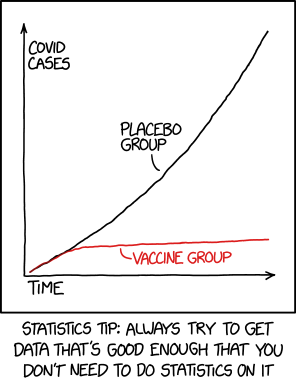
Statistics tip: Always try to get data that's good enough that you don't need to do statistics on it - Randall (xkcd2400)
This rings so true. When data points to an obvious conclusion, you don't need fancy analysis to arrive at some hypothetical correlation that may or may not be real. Perhaps the emphasis on statistical tools and methods within the sciences and social sciences in recent decades are a symptom that real progress is hard to come by, and data had to be marinated with statistical sauce to be made to work.
Statistics is also heavily utilized in "big data" as well -- even disregarding the "little data" applications and puffs-and-smoke buzzwords, it may be true that even "real" big data is somewhat doomed from the start -- sure, you may crunch the numbers and discover that a 2.4% increase in user engagement can be achieved by tweaking some feature, and that often translates well into bottom line numbers... but the crucial question is unanswered -- does it make a better product? Does the user actually benefit?
And thus the old adage: Lies, Damn Lies, ... and Statistics.
It felt like the Cinderella tropes crossed with Hollywood obsessions.
Production and acting was great, but a good story should at least be somewhat believable. Drugs and alcohol and these highly "rational" intellectual pursuits don't really mix. I had a hard time believing anyone, regardless of gender or race, would be able to perform competitively by habitually binging on drugs and alcohol that are well known to dull the senses. Perhaps in the more artistic pursuits one would have an advantage if they could see things differently with an altered perception, but chess is objective and requires utmost mental clarity.
We all need aspirations to get by, and having a strong, talented heroine competing in a game dominated by men is a wonderful story if told right. Yet believability is subjective. Knowing the "vibe" of the kind of people that win national championships in intellectual games give off, prevents me from enjoy the story as most other people would. There's just not enough passion, not enough drive for self-improvement, not enough emphasis on self-discipline, and too much pettiness, too much plebbery. At a world championship level, every player is blessed with all the talent that is humanly possible -- it is a statistical impossibility that anybody, regardless of gender or race, could rely on mostly talent and barge in and win while being distracted by serious personal issues on the side. You compete by giving up less important things in your life to focus on doing what it takes make it to the very top. And the sad truth is that, the privileged requires fewer sacrifices. Hollywood made a valiant attempt at balancing our protagonist's passion, character and talent with her emotional struggles to make things relatable with the average viewer, but in retrospect given the ecosystem there, there's probably no way it could have succeeded in writing anything remotely believable (to me at least).
Cinderella is a more believable story if it had a fairy than if it had not. But the audience wanted a fairytale without a fairy-godmother nor a prince charming. The modern woman is too independent for that, they say. And so, after experimenting with drugs, alcohol and sex, the girl in dirty rags suddenly became Queen on her own, without even really half-struggling, just because.
The funny thing is, while women and men do of course pull off some incredible feats in real life by winning some sort of lottery (often genetic), the rules of fiction is different. Truth is stranger than fiction, they say, and I think they're right. You need a fairy in a fairytale. A story of some person winning some kind of lottery, then living happily ever after, makes for a horrible story because it's "unrealistic", even though this happens to many people on a daily basis.